Arts & Humanities
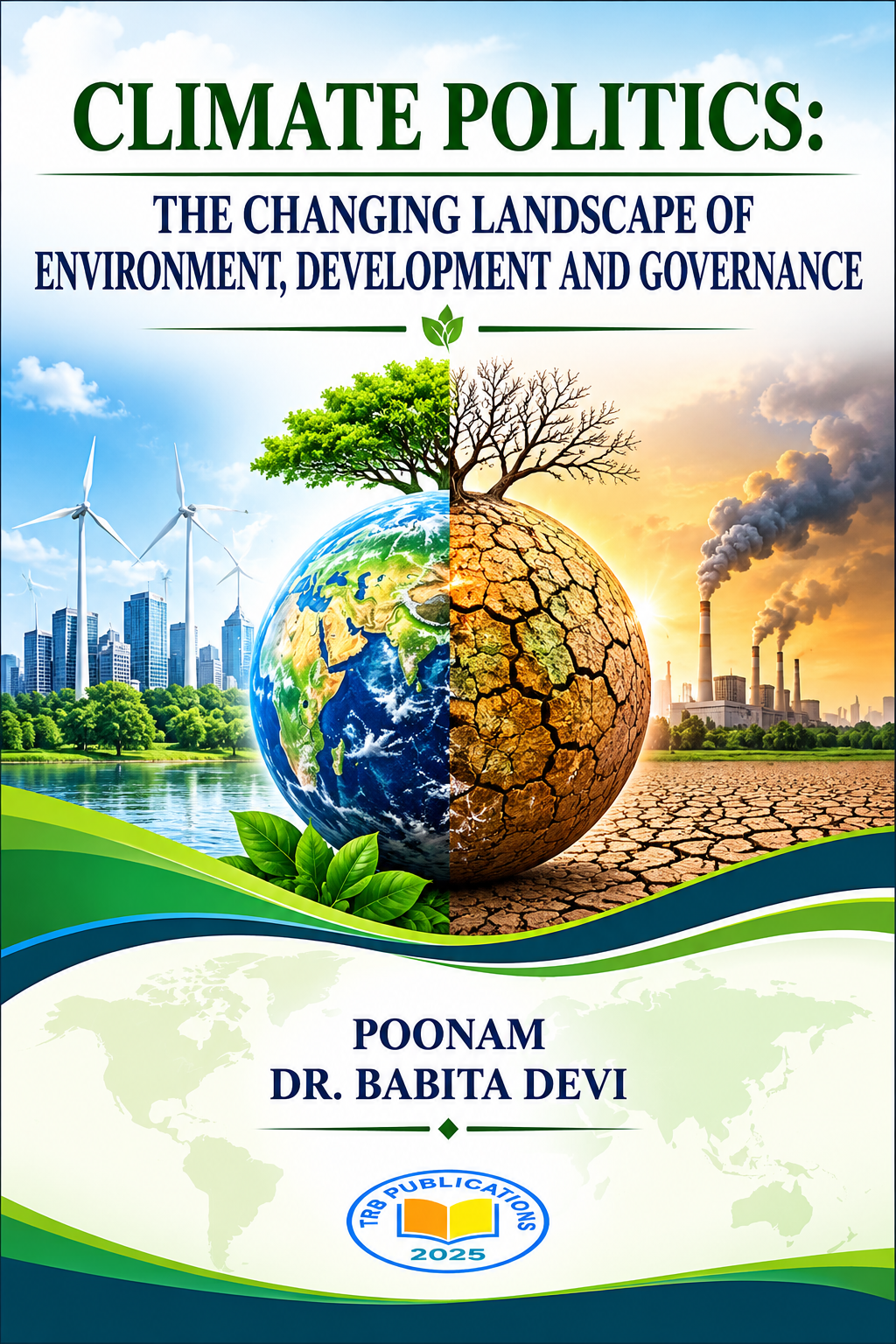
Climate change has emerged as one of the most pressing and complex challenges of the twenty-first century, extending far beyond environmental concerns to influence economic development, social well-being, political institutions, international relations, public policy, and global governance. Rising global temperatures, extreme weather events, biodiversity loss, changing rainfall patterns, melting glaciers, and increasing sea levels have brought unprecedented challenges to humanity. These developments have highlighted the urgent need for collective action, effective governance, international cooperation, and sustainable development strategies. Against this background, the book Climate Politics: The Changing Landscape of Environment, Development and Governance has been developed to provide a comprehensive understanding of the political, economic, social, and institutional dimensions of climate change. The book explores the evolving relationship between climate change and political decision-making, examining how governments, international organisations, businesses, civil society institutions, and local communities respond to environmental challenges. It highlights the significance of climate politics in shaping national priorities, international agreements, development strategies, and environmental policies. Particular emphasis is placed on understanding the role of political institutions, policy frameworks, and governance mechanisms in addressing the growing environmental crisis.
Read full description| Pages | 245 |
| Language | English |
| ISBN | 978-81-181525-2-1 |
| Publisher | TRB Publications |
| Published | October 31, 2026 |
| Format | DOCX |
A quick insight into what this book covers and why it matters.
Climate change has emerged as one of the most pressing and complex challenges of the twenty-first century, extending far beyond environmental concerns to influence economic development, social well-being, political institutions, international relations, public policy, and global governance. Rising global temperatures, extreme weather events, biodiversity loss, changing rainfall patterns, melting glaciers, and increasing sea levels have brought unprecedented challenges to humanity. These developments have highlighted the urgent need for collective action, effective governance, international cooperation, and sustainable development strategies. Against this background, the book Climate Politics: The Changing Landscape of Environment, Development and Governance has been developed to provide a comprehensive understanding of the political, economic, social, and institutional dimensions of climate change.
The book explores the evolving relationship between climate change and political decision-making, examining how governments, international organisations, businesses, civil society institutions, and local communities respond to environmental challenges. It highlights the significance of climate politics in shaping national priorities, international agreements, development strategies, and environmental policies. Particular emphasis is placed on understanding the role of political institutions, policy frameworks, and governance mechanisms in addressing the growing environmental crisis.
Research Scholar in the Department of Political Science at Baba Mastnath University, Haryana
DR. BABITA DEVI Assistant Professor, Department of Political Science & Public Administration, Baba Mastnath University, Rohtak.